
(NEXSTAR ) – Should We Be Wary of “Diet Weed”?
Delta-8-THC is one of the many cannabinoids that are found in cannabis sativa plants. It is not produced as naturally or with the same potency as Delta-9 THC, which is the compound responsible for the psychoactive effects of marijuana.
Chemically, they are almost identical. This one small difference in chemical structure affects the way it interacts with the body, and with the [cannabinoid]-receptors, explains Ryan Vandrey Ph.D.
Vandrey told Nexstar that Delta-8 was “about half as potent” as Delta-9 at producing the same effect.
Delta-8-THC is still gaining popularity, thanks in part to the 2018 Farm Bill, which was enacted inadvertently and paved the path for the Ninth Circuit Court ruling that certain low THC cannabis derivatives are exempt from Controlled Substances Act.
In recent years, the Food and Drug Administration has publicly expressed its concern about the unregulated status for Delta-8 and other cannabinoid products. They noted that Delta-8 has “psychoactive and euphoric effects which may be harmful to consumers” and encouraged Congress establish regulations. The FDA also argues that these hemp-derived cannabinoids may be chemically synthesized and therefore contain harmful contaminants.
The U.S. Drug Enforcement Administration continues to maintain, despite the 2022 ruling of the Ninth Circuit Court, that chemically derived cannabinoids are substances that should be controlled.
Some legislators are working to close the loophole which allowed Delta-8 to be legalized on a federal basis. In the meantime, however, many states have enacted their own laws governing the legality and use of hemp-derived products. This, say experts, could only cause confusion.
“Regulatory incoherence is a problem that we face, along with the lack of regulations from all levels and branches of government.” This will make it harder to come up with a coherent regulatory framework, says Peter Grinspoon M.D.
Grinspoon is a supporter of recreational marijuana legalization. He’s also the author “Seeing Through The Smoke: A Cannabis Expert Untangles Marijuana Truth.” Even he believes there should be a regulatory system to limit who can access it and to avoid contaminants such as heavy metals, pesticides and other harmful substances.
Grinspoon says that because Delta-8 is close to Delta-9 it’s likely relatively safe. “But even if it was proven that Delta-8 is safe, the Delta-8 sold in your local smoke shops has no indication of what’s inside.”
Vandrey has also suggested that Delta-8 THC may be substituted for other cannabinoids or drugs.
The main harm is that there has been no regulatory control over the industry. Vandrey says that the result is poor quality control and inaccurate dosage labels. Contaminated products are also widely available.
He added: “There are some companies and organizations that do a great job in terms of quality control, but there are others that don’t.”
It’s very worrying.
In the past year, the FDA has warned that it is possible to use “unsafe” chemicals in the chemical synthesis or dyeing of Delta-8 products. The FDA warns that Delta-8 may have serious side effects by itself.
The FDA reported that between Dec. 2020 to March 2022 it had been made aware of 104 adverse reactions, including “hallucinations,” vomiting, tremors, anxiety, confusion, and a loss of consciousness. Over half of these cases required medical evaluation. The FDA reported that during the same time period, thousands of cases were reported by national poison control centres, including one case in which “a medical outcome was death” .
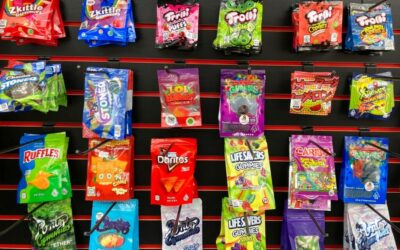
The FDA, and the Federal Trade Commission warned in 2023 that they would not sell Delta-8-THC-containing products packaged to look like snack foods.
Janet Woodcock M.D., FDA’s Principal Deputy Commissioner, wrote that “Children have a greater vulnerability to THC’s effects than adults.”
Woodcock said that adults are also at risk for “serious” side effects when they take THC products.
Vandrey has observed Delta-8’s effects on humans in laboratory experiments at Johns Hopkins. He said that people with conditions such as schizophrenia, bipolar disorders, psychosis and cardiovascular diseases are more likely to experience “very severe reactions” when taking Delta-8 THC. Vandrey says that a name like “diet marijuana” (or “cannabis light,” as Grinspoon heard) does not do much to warn consumers of the potential adverse effects.
He says that when you hear the term ‘diet marijuana’ and know you can purchase it at a gas station, it makes you wonder if it is harmful. Many people don’t realize that these products can have a strong psychoactive effect and cause you to become intoxicated and impaired.
Vandrey says that the FDA, DEA and other government agencies should do their best to clear up any legal gray areas surrounding Delta-8-THC. If it’s legal, then regulate it as you would everything else.
Vandrey and Grinspoon both suggested that the other solution is to legalize Delta-9 THC federally, which is already legalized in many states. They believe this would destroy the market for Delta-8 THC unregulated products.
Vandrey says, “What the science shows us is that it’s just a difference in potency [between Delta-8 THCs and Delta-9]”. “Knowing this, it doesn’t make sense for one to be a Schedule I drug and another unscheduled or unregulated.”
Grinspoon continues, “This is the Wild West.” “It’s a wild west.” Grinspoon adds.

