
Former Trump administration drug czar, who was a part of the Trump administration’s first term as president, stressed that it is important to fight back against “misinformation” coming from the Food and Drug Administration. The FDA has tried to ban kratom in the U.S. and overseas.
Members of the American Kratom Association said in a Tuesday webinar that they anticipate federal legislation to regulate this drug “will soon be filed” by Congress and may be considered later this session.
Mac Haddow is a senior fellow with AKA. He said that the text of the upcoming bill will be “word-for-word” the same as federal legislation introduced in the last session. The Kratom Consumer Protection Act will replace the title. This is a reference to model legislation that AKA has been lobbying at both the state and federal level.
On the Senate side of things, Senators Mike Lee (R-UT) and Cory Booker (D-NJ), who also sponsored last session’s bill, Federal Clarity for Kratom Consumers Act, will be sponsors. Mike Lee (R – UT) and Cory Booker – both Democrats – who sponsored the Federal Clarity for Kratom Consumers Act in last session, will be leading sponsors. Mark Pocan, D-WI and Jack Bergman, R-MI will be the primary sponsors in the House. Pocan was the sponsor of last year’s House bill, while Bergman has been added.
The forthcoming legislation’s bipartisan sponsorship in each chamber–specifically pairing a “very liberal” elected official with a “very conservative” one–is designed to highlight “that this is not a partisan issue,” Haddow said. “This is a matter of good policy.”
The bill, if it becomes law would require FDA take additional steps to evaluate health and safety for kratom. It would also prevent the agency from regulating the kratom product in a more restrictive way than the regulations that apply to food and dietary supplements.
AKA is expecting more sponsors and more support for this year’s legislation.
Haddow was joined by former Trump drug czar Jim Carroll, and John Shinholser – co-founder of The McShin Foundation – during a webinar hosted by AKA on Tuesday. The discussion focused largely on FDA’s efforts to outlaw kratom at the federal level, which advocates have so far managed to stop.
Carroll, who spoke separately to Haddow about he efforts as drug czar, to push back against FDA’s previous anti-kratom recommendation earlier this month, said that the agency was responsible for perpetuating unfounded fears about kratom.
He said that he was “at the epicenter” when this issue arose in 2018. “The FDA came and tried to unilaterally ban kratom.”
He said that during a presentation in his office, the agency had presented “an incomplete view of the facts out there”, suggesting that kratom was of no redeeming quality and carried a serious risk of injury or even death.
Carroll, who was then the assistant secretary of health for the Department of Health and Human Services, said that he and other people were able, after conferring with Brett Giroir, the then assistant secretary of Health at HHS, to stop the proposed ban. Carroll said that after all the facts were presented the FDA ban was swiftly quashed. “They’re missing out on a lot,” Carroll recalled.
He said that among the myths FDA propagated was the idea kratom was linked to many deaths when, in reality, these deaths were later attributed by hazardous contaminants found in kratom. AKA’s proposed legislation could help prevent this by requiring lab tests for pesticides as well as heavy metals.
Haddow stated that FDA had told “so many people” the same nonsense, and “it’s been rejected by HHS, the DEA [and] the U.S. Congress, as well as the National Institute on Drug Abuse. FDA is the lone wolf, and they continue spreading their misinformation.
AKA, in addition to federal legislation and FDA accountability, is working to improve the accuracy of information regarding kratom.
Haddow explained that “we’re doing two things.” AKA, along with other colleagues and friends from the dietary supplements industry, plan to launch a site that allows people to report FDA misinformation about kratom.
He explained that “it’s evident that their embarrassingly bad evidence and data need to be called out.”
Haddow stated that AKA also encourages members of Congress overseeing FDA to write to the agency to “hold them accountable for their present actions”.
The organization is working to reverse some bans on kratom at the state level. Some states still ban kratom, including Arkansas, where a daughter of one of the webinar attendees was arrested recently for having 11 grams after moving from Texas where it is legal. Haddow advised: “You should immediately hire a lawyer for your daughter.”
AKA’s Statement of Principles states that the ideal situation would be to have kratom products tested, producers licensed and retailers required by law to verify IDs. They also want to sell to only consumers over 21. According to the organization, unlicensed and unregulated producers perpetuate stigma towards kratom through selling to minors, not accurately labeling products, or, in worst cases, adding potentially dangerous additives.
As of now, 11 states have adopted some form of the Kratom Consumer Protection Act. However, state legislators have occasionally departed from AKA’s core principles. Florida’s latest version of the Kratom Consumer Protection Act, for instance, does not require any product testing.
Carroll said that it is time for FDA, instead of trying to ban kratom to go after bad actors in the industry. He said that when FDA was considering how to regulate electronic cigarettes several years ago “the industry did not regulate itself so the government took this action.”
He said, “The same thing should apply here.” “Kratom shouldn’t be sold or marketed to children.” It should not have cartoon characters, be candy-flavored or sold to minors.
Kratom can be used for a variety of purposes including anxiety and relaxation. It is also used to reduce the symptoms of opioid withdrawal. This has gained it much attention in light of the ongoing opioid epidemic. Shinholser has seen first-hand the power of kratom in helping to ease opioid withdrawal. He compares it with alternatives like suboxone and methadone.
The American Medical Association has updated its position regarding kratom. It adopted a resolution in which it stated that people who use kratom for personal purposes should not be penalized. Additionally, it said that the FDA should regulate kratom and that its safety and effectiveness should be tested through clinical trials prior to its being marketed and prescribed for any condition.
AKA, a group of advocates, said that while they wanted consumers to have the option to buy kratom from retailers over the counter, the resolution was an important step away from the more aggressive criminalization approach.
Top Federal Health Agency Says Marijuana should be Moved to Schedule III in Historic Recommendation to DEA
Image courtesy of . Wikimedia/ThorPorre.
The post Federal Legislators Are Preparing to Reintroduce Legislation Regulating Kratom Amid Pushback Against FDA’s Proposed Ban first appeared on Marijuana Moment.


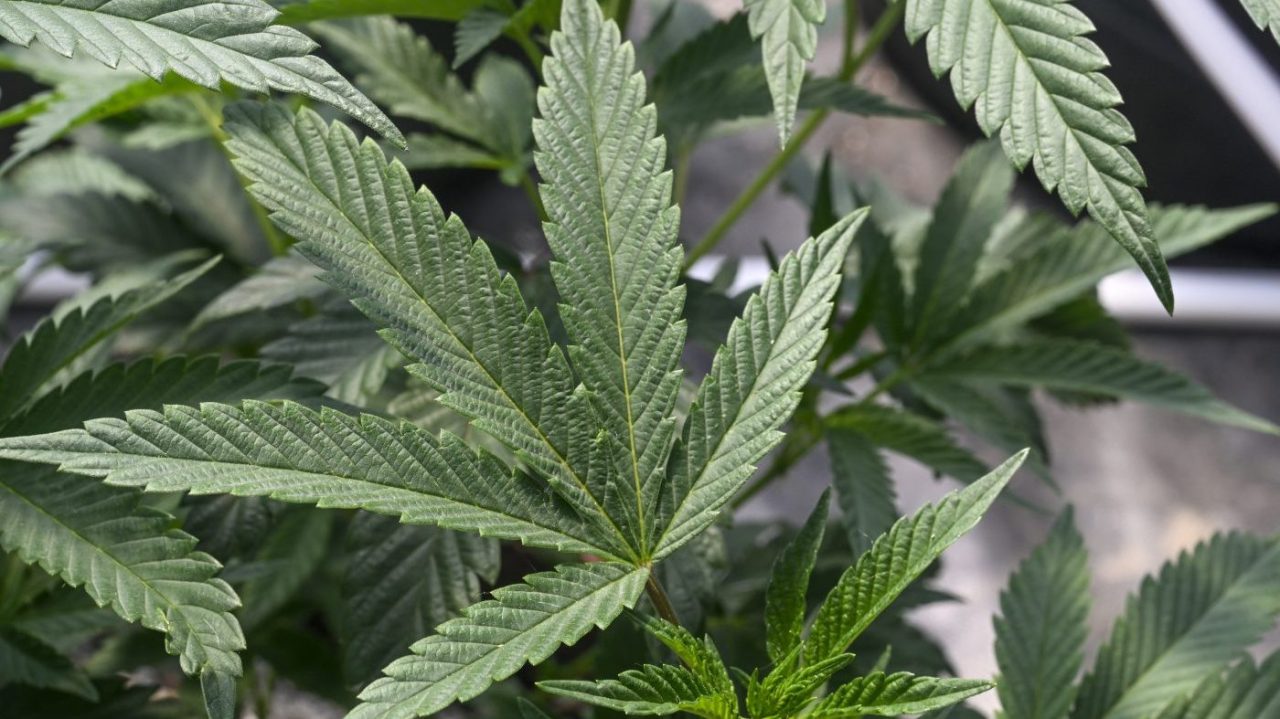 Reclassification of marijuana by federal health officials is recommended