
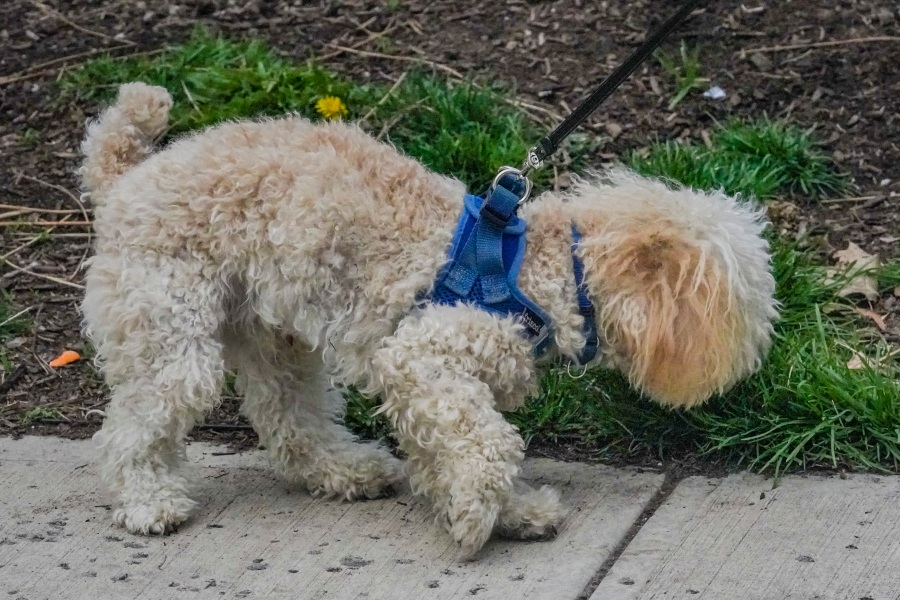
NEW YORK, NY (AP) – Bondi, a 8-month old toy poodle had just come back from a stroll when he started stumbling. Colleen Briggs rushed Bondi to the veterinarian when his head began wobbling and he was unable to stand.
The doctor made an immediate diagnosis: Bondi had been stoned.
A sniff on Bondi’s walk led him to a discarded joint that he ate.
He was simply doing what he always does — exploring and sniffing. Briggs began to notice pot shops popping up all over New York City. She also noticed the smell of marijuana when she was walking around her Manhattan neighborhood, as well as the unfinished cigarettes that littered the sidewalks.
Users can smoke marijuana in public places such as New York City where the first recreational dispensary was opened last year. Dogs are eating more edibles and joints that have been left out. This has caused alarm among pet owners and veterinarians who attribute the rise in poisonings to smokers who don’t realize the dangers of littering.
According to Dr. Amy Attas of New York City, marijuana poisonings were rare in pets even after medical dispensaries opened. Many marijuana poisonings occurred in the home until recently when pets ate their owners’ stashes.
Attas explained that the reason for the high number of cases is because people use marijuana in public and discard the ends. “And this is a serious problem, because dogs will eat these.”
She had treated six cases in the first three month of this year. This is the same as she has done for the last 30 years. She said that if you multiply this by the number vets in New York City it shows the extent of the problem.
According to the American Society for the Prevention of Cruelty To Animals, cases are increasing nationwide. The number of cases increased by 11% last year compared to the 6,200 reported in 2021. Over the past five-year period, the increase has been 300%.
Attas said, “It is incredible to me how widespread this is now.”
21 states have legalized recreational cannabis use, and large cities like New York are awash with the smell of marijuana.
Owners are often unaware that their dog has eaten leftover meat until the signs of toxicity begin to appear. Even then, the owner may not know what is wrong with their pet.
Sue Scott panicked when Circe, her 9-month old fawn Pug, collapsed during a walk. Circe’s feet were splayed on the ground, her head was swaying and she drooled.
Scott, aged 68, said: “A thousand things were going through my mind.” Marijuana-induced poisoning wasn’t one of them. She said, “I never would have thought that.”
Scott called Dr. Attas via video, and he said Circe showed all the signs that she was high. She keeps Circe on an even shorter leash and is more aware of where she pokes Circe’s nose.
Scott, who owned four pugs and none of them ever returned home stoned, said: “I don’t think you’ve met pugs. They’re always on the hunt for their next meal.” It’s sometimes hard to control them, because they’re so fast. “They’ll dart at anything.”
Even though dogs are rarely fatally poisoned by marijuana, the treatment can be costly. It may require a trip to an animal emergency room and a stomach-pump, as well as intravenous fluids.
Stress is also a huge issue for the patient’s owner.
Briggs, his owner, reported that Bondi was poisoned a total of three times. The first time happened last autumn.
Briggs acknowledged that, despite becoming more vigilant while walking her dog, she was distracted when Bondi fell ill a second. She let Bondi enjoy his high.
“Walking him… it’s a really intense experience.” “I’m always on the ground looking for it, and now they’re everywhere,” she said about the spent joints she and Bondi find on walks.
Briggs said: “Once, I caught him and grabbed the item out of his mouth.”

